
Madelyn Metsch, LCSW
Let me tell you a little about me.
Most of my clients are holding something heavy for someone else—a child with a chronic condition, a parent after a brain injury, a brother or sister whose diagnosis reorganized the whole family.
They're competent, capable, and running on empty. And they've usually spent years being the person who's fine.
You don't have to be fine here.
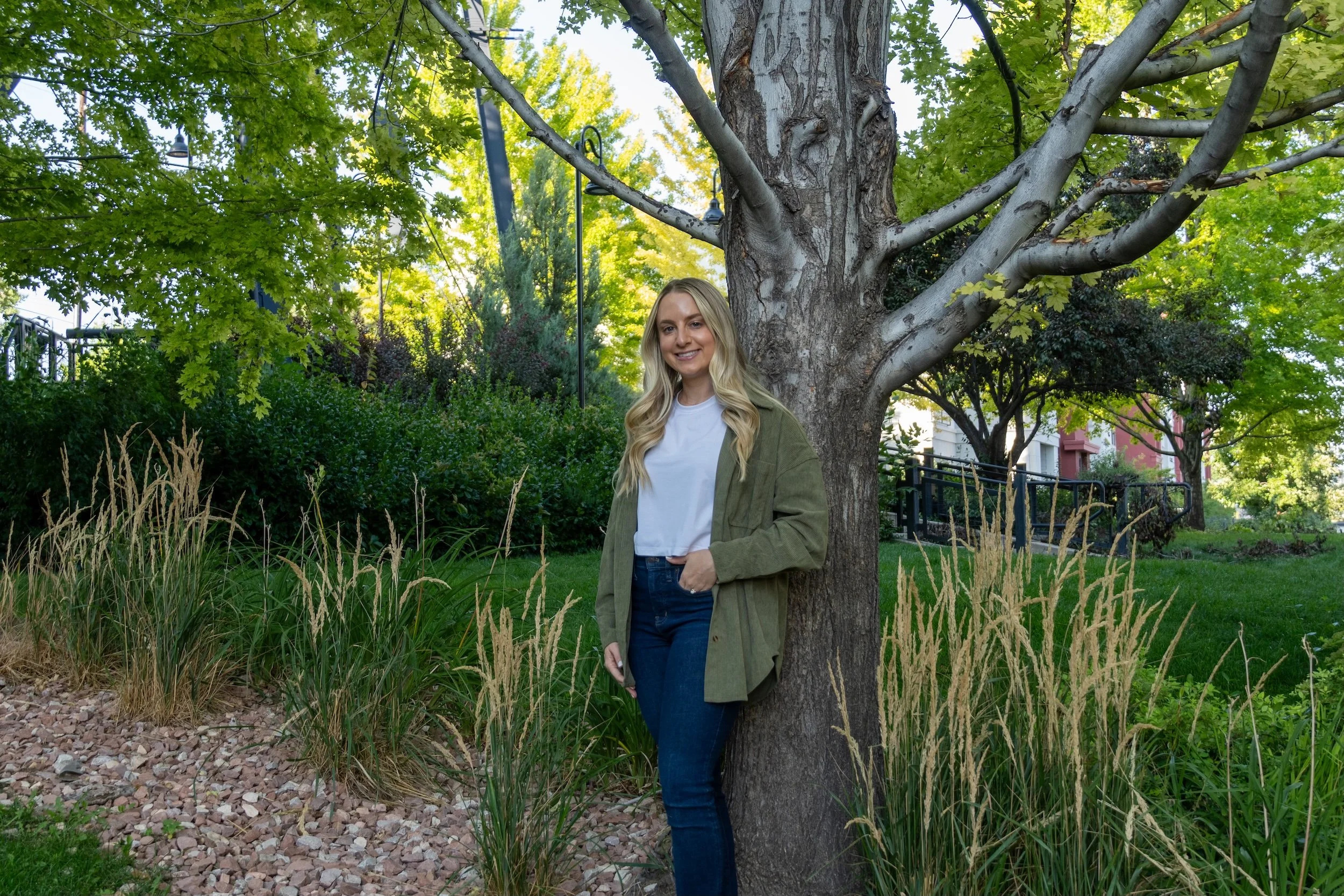
How I Work
Where I Come From:
My path here started in a primary care clinic for children and adults with complex medical and developmental needs. Much of that work was as a liaison—between families, medical teams, and the outside agencies involved in a patient’s care. When a child has medical complexity, there are so many systems in the picture at once, and I helped families move through all of them.
A lot of what I did was translation. I'd help a medical team understand how a particular family learns best, and what was actually happening at home. That a care plan wasn't being followed because a parent hadn't slept in four days, or because transportation was unreliable, or because a caregiver's own depression had gone unaddressed for years since there was never any time.
Those years taught me how stress, grief, identity, and family dynamics tangle together over the long course of caregiving. They also taught me how to stay with people in the middle of something uncertain without rushing them toward an answer.
What Sessions Actually Look Like:
I draw primarily on Acceptance and Commitment Therapy (ACT), Internal Family Systems (IFS), and elements of Somatic Experiencing (SE). My graduate school concentration was in family systems, so I tend to look at the whole family rather than locating the problem in one person.
In practice, that means some sessions are practical. We discuss how to handle a specific conversation, what to do about the sibling who's shut down, and how to hold a boundary with a family member who doesn't respect it. Others are slower, sitting with emotions you haven't had room to feel. You get to decide which kind of day it is.
My clinical background allows me to meet you with steadiness, empathy, and an ability to hold space for complexity and possibility at the same time. Above all, I strive to create a welcoming space where you feel safe to show up as your full, authentic self. I bring openness, compassion, and when the moment allows—a sense of humor.
What I’ll Create Space For:
There's room here for all of it. The grief that arrives long before anyone has died. The frustration you feel toward someone you love more than anything, and the guilt that tends to follow it. The exhaustion. The days you're fine, the days you're not, and the ones where you honestly can't tell.
There's also room for the good. Caregiving families get very used to only being asked about the hard parts, and there's often real joy in here too. The milestone that took years, the private jokes, the moments that would make no sense to anyone outside your house. You can bring those without explaining why they matter.
And there's room for laughing. A lot of what happens in caregiving is silly and absurd, and saying so out loud with someone who understands is its own kind of relief.
Our work together is collaborative. My job isn't to fix your situation—much of it isn't mine to fix—but to make sure you're not carrying it alone. I honor the ways identity, culture, and lived experience shape your story, and I want this to be a place where all parts of you are welcome.


What I Believe About This Work
Caregiving is love, and it's also labor. The love part gets all the attention. The labor part often goes unpaid, unscheduled, and largely unacknowledged, even though it fills your days. I treat it as real work, because that's what it is—and because it's hard to name your exhaustion when nobody around you calls it a job.
You're allowed to want your own life. Wanting time, privacy, a career, a marriage that isn't organized around appointments—none of that means you love the person less. Most of my clients need to hear this out loud more than once.
You're allowed to grieve the life you expected. Most parents picture a certain kind of family before their child arrives. When a diagnosis changes that picture, the grief is real—for the childhood you imagined, and sometimes for the life you had before. And yes, it can look like envy: watching other families worry about report cards and middle school drama while you're managing something else entirely. That doesn't make you ungrateful or a bad parent. It makes sense, and you can say it out loud here.
Siblings are not extras. In families organized around one person's needs, the other kids learn to be low-maintenance. That has a cost, and it usually shows up decades later. It deserves its own attention, not a mention at the end of someone else's care plan.
I'll be honest with you about what can and can't change. Some diagnoses don't improve. Some family members won't change. What can shift is how alone you are inside it, and how you want to move through what's in front of you.
Licensure & Background
Licensed Clinical Social Worker (CSW.09928754) - Colorado
Six years of experience as a medical social worker in a primary care clinic for children and adults with chronic conditions and disabilities
Former resource counselor for adults with developmental and intellectual disabilities
Education & Training
BA in Psychology, UC Santa Cruz, California
Master of Social Work (MSW), University of Denver - concentration in Family Systems Practice